
What'sApp: 0086-13510841357
Economic and technological barriers to the adoption of these displays have been lowered significantly, according to IHS.
September 30, 2015
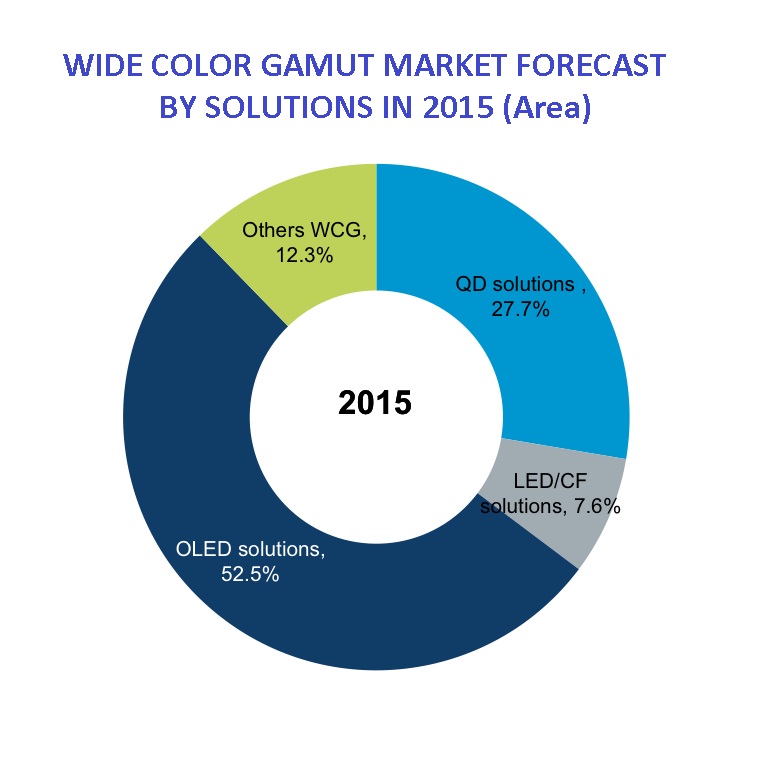
At the moment, OLED solutions hold the lion's share of wide color gamut displays on the market. These are expected to be found in larger screens such as computer monitors and TVs in the near future (Source: IHS)
According to new research from IHS, wide color gamut displays for TVs, tablets, smartphones and other screens are expected to grow from 3 percent of the market (by area) today to 25 percent by 2020. Color gamut is the ability of a digital display to reproduce colors seen by the naked eye, which means a wide color gamut has a greater range of colors available.
At present, the main technology used to produce this is OLED, which displays a color gamut that meets 100 percent of the NTSC video standard. For comparison, conventional LCD displays reach only about 70 percent. Quantum dot technology, the second-most widely used display type for this kind of screen, has similar performance to OLEDs.
In the past, most displays using this kind of screen are found on smartphones and smart watches, but this has already changed. IHS expects that TVs will make up 86 percent of the market by 2020. The technological and economic barriers to the use of these displays in TV sets and computer monitors have been lowered to the point that at least high-end displays now include OLED and quantum dot technology.
Copyright © 2006-2016 Shenzhen Vitek Electronics Co., Ltd.